|

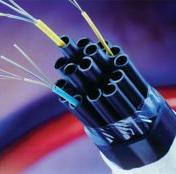
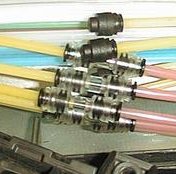
Laserstream™ is perfectly suited to multi-phase projects or where business needs for the cabling infrastructure are not determined at the outset. This is why blown fibre is a popular choice for large office developments or campus environments where the cabling infrastructure is often installed in phases over a long period of time. It has also been deployed in areas where minimum disruption is required, such as airport runways. Laserstream Blown Fibre System enables optical networks to be deployed on demand from one point of a network to another using compressed air to blow optical fibre into pre-installed tubes.
Network Flexibility
With continued network demand, deciding on an IT infrastructure can be a gamble for IT Managers. Laserstream gives users the reassurance that cables can be either blown in or blown out, and upgraded if the need arises. There is no restriction to initial fibre counts and expansion is available through larger fibre count units. Fibres can be easily re-allocated and any damaged fibres can be quickly replaced with limited disrutpion to the end user.
Cost Deferrement
The blown fibre specifier can enjoy budgetary benefits from the fact that the fibre is deployed as and when required, thereby spreading payment across different budgetary periods. When traditional fibre systems are installed, the decision is often made to install more fibre than required to avoid the cost of future upgrades, which is called “dark” fibre.
Laserstream eliminates the need for “dark” fibres by deploying empty tubes and blowing fibre on demand thereby reducing initial capital expenditure and deferring costs. Owners of multi-tenanted buildings often specify a blown fibre cabling infrastructure because it means the new tenants can take advantage of an existing cabling infrastructure as and when they move into the building.
Additional benefits of Laserstream
- Simplified planning - Network is built according to today’s needs and fibre count can be increased as demand grows.
- Cost effective - install empty tubes and only pay for fibre as and when required, spreading capital.
- Reduced splicing - minimises branching and splicing of traditional networks, thus reducing engineering costs.
- Minimum disruption - Continuous upgrade and repair of network with minimal installation cost and disruption.
- Future-proof the network build.
- Easy upgrade of networks, branched or extended, giving maximum flexibility and uninterrupted fibre blowing right to the destination.
- Simplified emergency restoration.
|